Crop Rotation Group
Brassicas (Cabbage family)
|
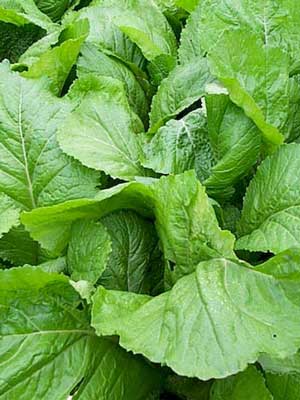
|
Soil
Fertile, well-drained soil.
|
Position
Full sun to partial afternoon shade.
|
Frost tolerant
Mustard is cool-season annual that can tolerate light frosts but not hard freezes.
|
Feeding
None generally needed, because mustard is customarily used as a late summer/fall cover crop to take up nitrogen left in the soil by corn or other vegetables.
|
Companions
Mustard does an excellent job of suppressing weeds when grown in a solid mass.
|
Spacing
Single Plants: 6" (15cm) each way (minimum)
Rows: 6" (15cm) with 6" (15cm) row gap (minimum)
|
Sow and Plant
Sow in spring to use as a short-term cover crop or for seed, or sow in late summer for greens or as a fall cover crop.
Broadcast seed into raked soil so that the seeds are about 2 inches (5 cm) apart and one-half inch (1 cm) deep. Thin to 6 inches (15 cm) apart in all directions, or sow into plug trays or small pots.
Our Garden Planning Tool can produce a personalized calendar of when to sow, plant and harvest for your area.
|
Notes
Mustard residue suppresses soil-borne nematodes, so it is an excellent cover crop to grow before potatoes.
|
Harvesting
Mustard tends to bolt in summer, which is great if you’re growing for seed. Harvest when seed pods dry to a pale brown. For greens, gather individual leaves for cooking, which taste best after the first frost has passed.
For fall cover crops, chop down the green foliage with a hoe and turn it under just before hard freezes are expected. The mustard roots and foliage will rot during the winter months.
|
Troubleshooting
Irrigation is often needed to get a good stand in dry fall weather.
|